





Blog post
2 mins

Including utilization across IDEs, repos, Slack, and meetings, all unified.
Pinpoint the root causes behind costly context switching and tool usage patterns at scale.
With a developer productivity index built on a large, detailed data set.
See exactly where dev time disappears before deciding what to fix

Turn engineering best practices into processes everyone can learn
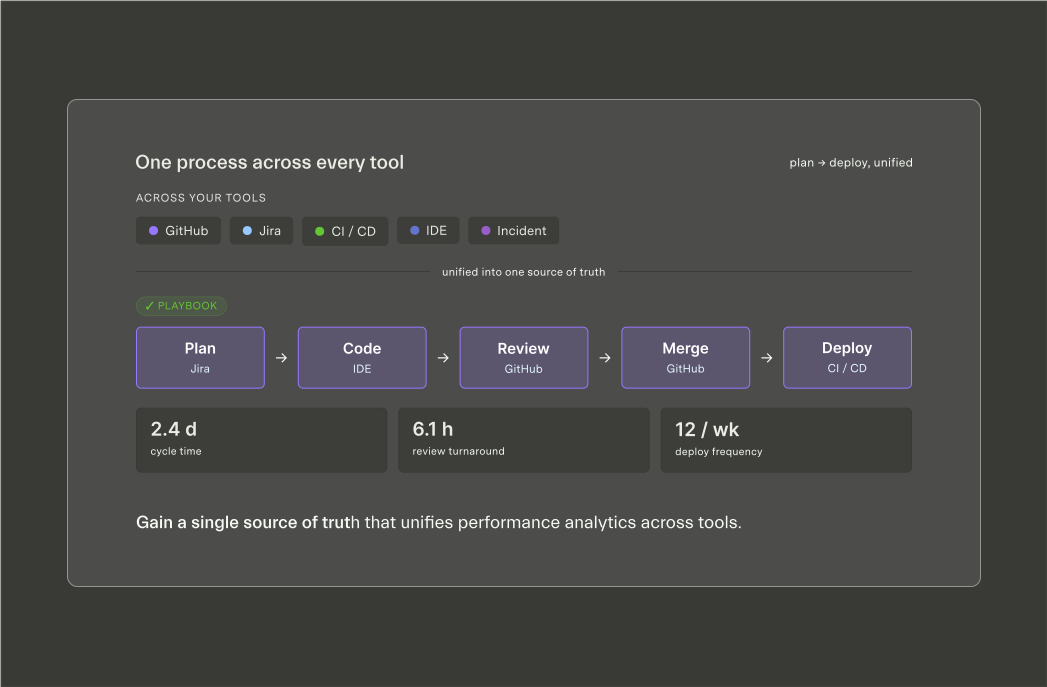
Gain a single source of truth that unifies performance analytics across tools
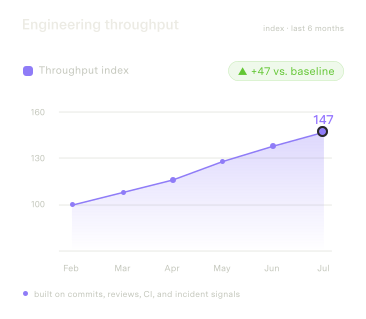
Quantify engineering productivity over time using rich work context
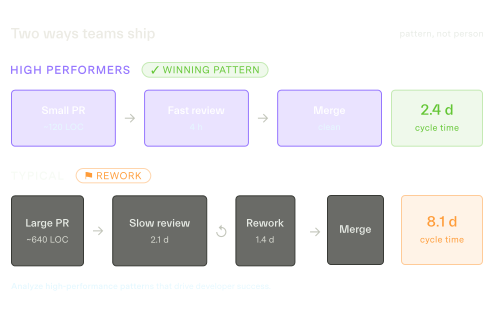
Analyze high-performance patterns that drive developer success
Accelerate engineering wins with AI across teams, repos, and regions

No, Skan AI should be used to complement engineering metrics platforms. The platform adds the human-activity layer on top of those metrics, capturing the activity (e.g., context switching, collaboration overhead) that those tools can’t capture.
Skan AI is not a productivity monitoring tool, and all work captured is anonymized and stored locally from Day 0. Using Skan AI helps fix process and tooling friction, which can help free engineering teams from repetitive tasks and inefficient workflows and give them more time to focus on high-value work.
Typical engagements with Skan AI have taken 4-8 weeks from kickoff to initial insights, and you’ll first start seeing productivity patterns within days of deploying our zero-integration platform.
