
Blog post
2 mins

Healthcare
Trusted by 2 of the Top 5 US Healthcare Companies
Cost savings through process optimization
Call center savings
Reduction in process variability

Know exactly which claims steps slow you down, so you stop guessing what to fix and focus where it counts.
See the bottlenecks, manual work, and process variation other tools miss across every application your teams use.
Spot process problems before they reach members, and prevent issues instead of firefighting them.
Claims excellence
Enrollment & Billing
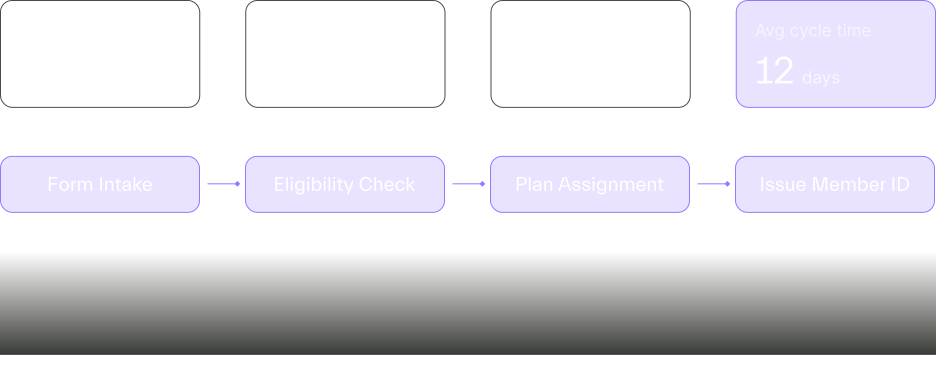
Simplify member and group onboarding steps
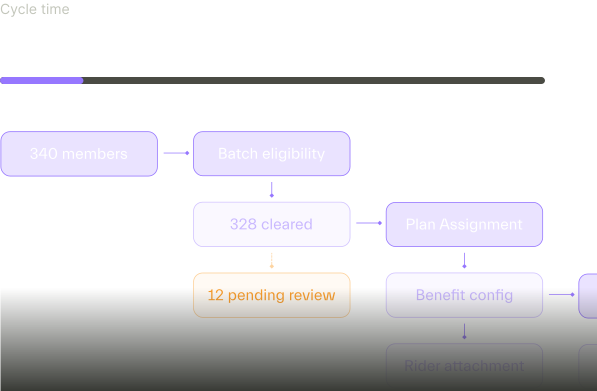
Cut processing time for group enrollments
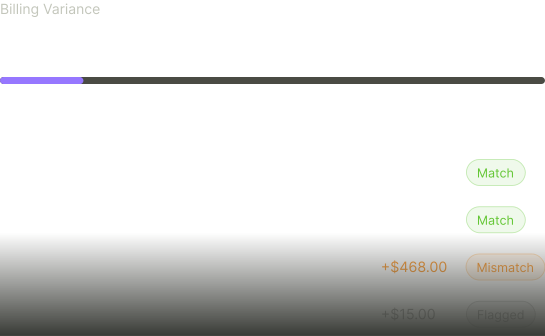
Reduce billing errors and adjustments

Experience Improvement
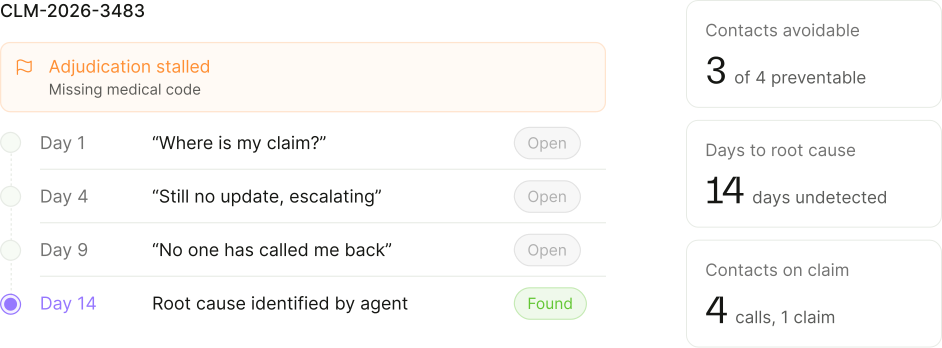
Understand why members call multiple times about the same claim.
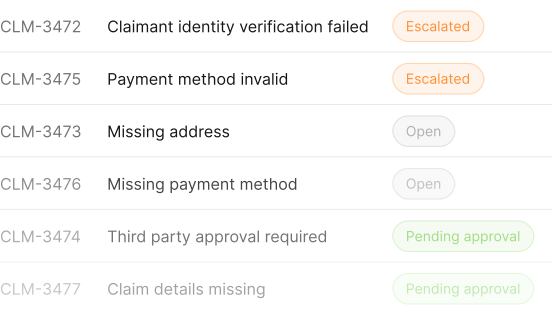
See which claims create the most follow-up calls.
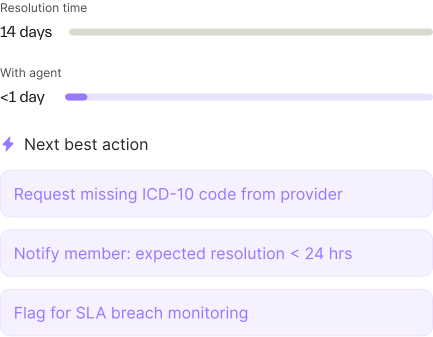
Resolve issues faster to reduce member complaints.
Network Management
Claims performance can be analyzed by observing how work flows across systems, rather than by reading the underlying patient records. Process intelligence platforms mask and redact sensitive fields, so teams can see where claims stall and why while keeping protected health information (PHI) secure and HIPAA-compliant.
Claims work spans many applications, including legacy systems, mainframes, and manual workarounds that tools built on single-system logs cannot see. A large share of claims activity often happens in applications those tools miss, which is why delays are difficult to trace without a complete view of how payer teams perform work across claims operations.
The most effective approach scores each activity by its impact on outcomes such as processing time and cost, not just how often it occurs, and by the level of risk and human judgment involved. That produces a prioritized roadmap that targets the highest-return automation first and keeps complex, judgment-heavy work with people.
Organizations often begin identifying bottlenecks within four to six weeks, with early improvements commonly focused on claims processing time, payment accuracy, and operational efficiency.
