
14,000+
hours/year of automation-ready effort
Before, it was turn on AI and hope. Now we know exactly which processes to automate, what we'll save, and how to prove we got there.

Process Intelligence

Skan AI sees how work really happens across every application, turning it into the maps, metrics, and opportunities your operations actually need. For teams building their foundation, understanding how process mining works is the practical starting point before moving to full process intelligence deployment.

Events processed
Processes mapped
Enterprise apps observed

Observe work across systems, teams and
workflows, including the exceptions, workarounds and decisions that reporting never captures.
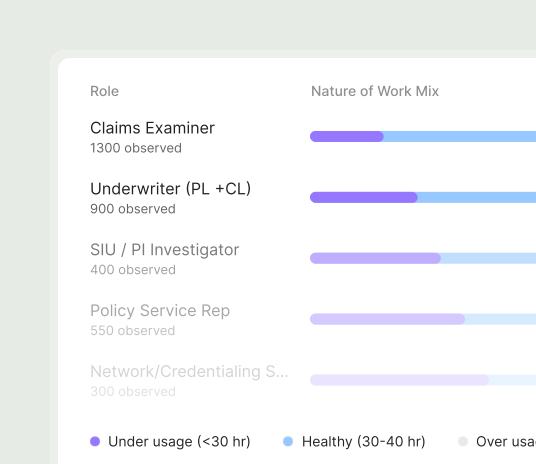
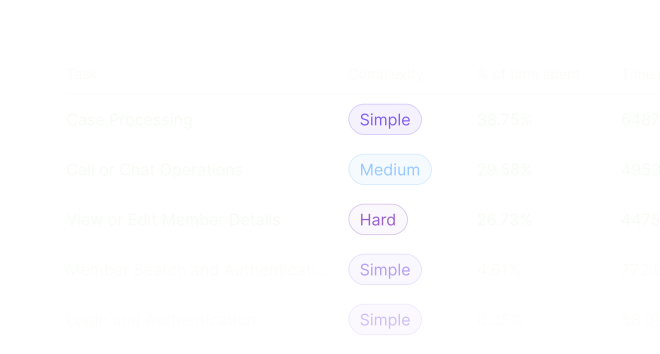
Identify where work slows down, where variability creeps in and where operational performance is being lost.
Prioritize the changes that will have the greatest impact, backed by evidence rather than assumptions.

A lightweight desktop agent watches how work gets done — every click, every app, every handoff — without disrupting the people doing it. You control exactly what's captured.
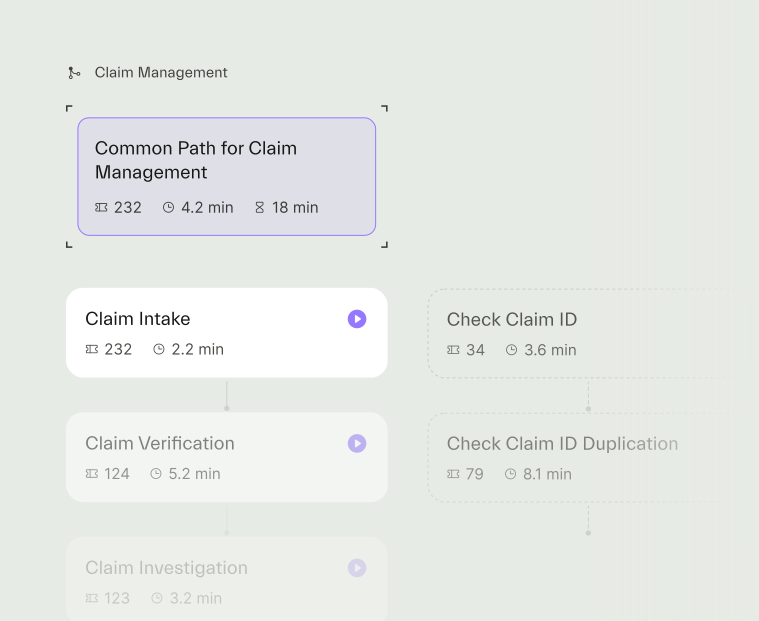
End-to-end process maps
Variant analysis
Exception paths and rework loops
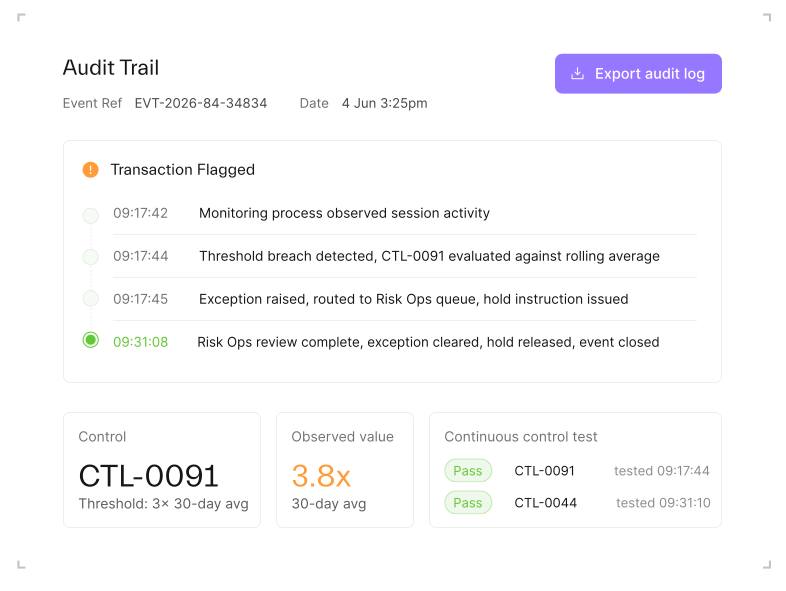
Real-time exception detection
Root cause analysis
Continuous audit trail
Process intelligence is the practice of observing how work actually gets done across systems, teams and exceptions, then turning it into maps, metrics and improvement opportunities. Skan AI observes work across the applications people already use, so leaders see the bottlenecks, handoffs, rework and workarounds that reporting misses.
Process mining reconstructs work from system event logs. Process intelligence from Skan AI adds observed work activity, so it captures the manual steps, workarounds and exceptions that logs miss, including work in legacy applications.
Skan AI observes work through a lightweight desktop sensor, with zero integrations, APIs, or logs. It has processed more than 25 billion events across its customers. Pilots take weeks, not months.
Skan AI feeds what it observes into the Context Graph of Work, a continuously updated model of how work gets done. Skan turns that context into Agentic Operating Procedures (AOPs), so agents run on how work actually happens, not on what documentation says.
Skan AI uncovers bottlenecks, process variation, unnecessary handoffs, rework loops, manual workarounds, delays, context switching and compliance risks. It shows where time is spent and lost across teams, regions and products, and ranks the highest-impact opportunities to improve or automate.
Skan AI Blueprint turns what Skan observes into an AI masterplan with recommendations, roadmaps and ROI. Skan AI Agents draw on the same Context Graph of Work, so the highest-value workflows move into execution without rediscovering the work.